
Firefighting System: The Core Defense Line
The elevator electrical room is a concentrated area of precision electrical equipment, where the selection of fire suppression systems is crucial.
Gas fire suppression system: This is the preferred choice for high-value electrical equipment areas such as elevator machine rooms. It typically uses non-toxic, residue-free gases like carbon dioxide or heptafluoropropane as the extinguishing medium. In the event of a fire, the system rapidly releases the extinguishing agent to suppress the fire source without causing secondary damage to electrical equipment.
Automatic sprinkler system: Another common firefighting device that can quickly respond in the early stages of a fire by spraying water to extinguish or control flames and protect electrical equipment.
Portable fire extinguishers: As a supplement, electrical equipment rooms, elevator machine rooms, and other areas are typically equipped with ammonium phosphate dry powder fire extinguishers (such as MF/ABC4 type) in accordance with regulations, to facilitate emergency firefighting in the initial stages.
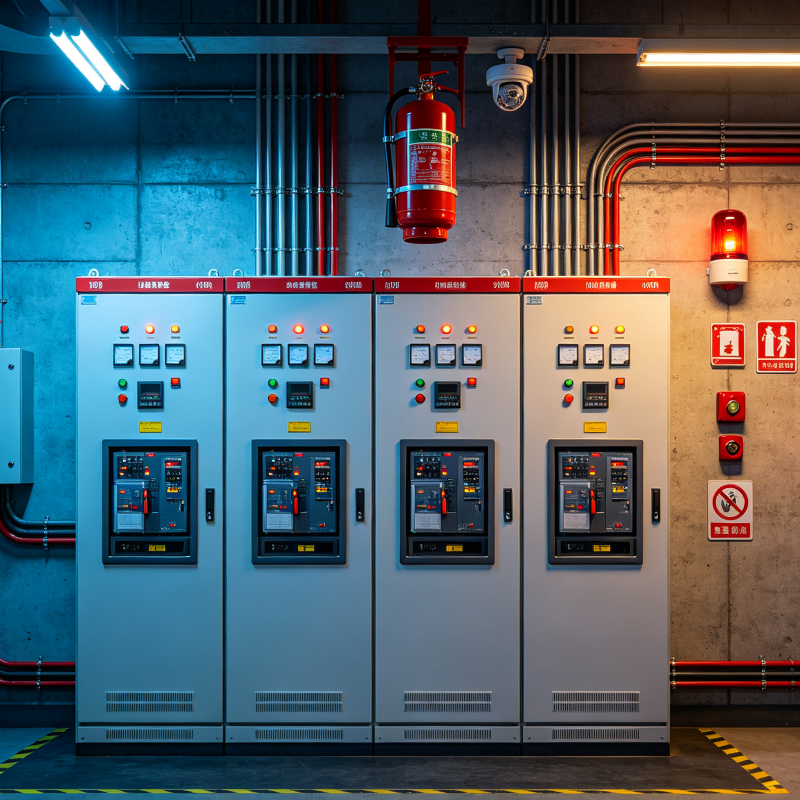
Alarm and Control System: Early Warning
The “automatic” function of an automatic fire protection system relies on a sensitive detection and control system.
Automatic Fire Alarm System: By installing smoke and temperature detectors in the equipment room, the system can promptly detect early signs of fire and issue alarms.
Interlinked Control: According to fire safety regulations, the fire alarm system must be interlinked with the elevator control system. Upon confirmation of a fire alarm, the system will automatically lower the elevator to the first floor and open the doors to prevent unauthorized access to the fire scene, while simultaneously cutting off non-fire-related power supplies.
Physical Isolation and Evacuation Guarantee
In addition to active fire suppression and alarm systems, passive physical barriers and evacuation facilities are equally crucial.
Fire doors and firewalls: The door of the elevator machine room shall be a fire door with a fire resistance rating of no less than 1.0 hour, serving as a crucial physical barrier to prevent the spread of fire.
Emergency lighting and evacuation guidance: Install fire emergency lighting and evacuation signage in the elevator machine room to ensure clear escape route guidance for personnel in case of power failure during a fire.
Fire power supply: Elevators and firefighting equipment are classified as critical loads, and their power supply typically adopts a dual-power design to ensure the normal operation of the fire protection system in emergency situations.
summary
Although the “Lingwang” brand’s fire protection system is not mentioned in public information, its automatic fire protection system in elevator electrical rooms adheres to unified industry standards in functionality and configuration. This system establishes a robust safety barrier for elevators, a critical vertical transportation tool, through the coordinated operation of modules such as gas fire suppression, fire alarm, interlocking control, fire compartmentation, and emergency evacuation.